Resistance

The purpose of the SS was to strip the prisoners of their humanity by erasing any hope of resistance and solidarity. Nevertheless, the prisoners found ways to resist their policies of annihilation.

Acts of resistance were recorded in almost all camps. Some were aimed at survival, such as theft and escape. Others openly defied the omnipotence of the SS. There were also organized forms of collective resistance, such as sabotage and attempted uprisings. These acts challenged Nazi logic and boosted the morale of the prisoners.

Image

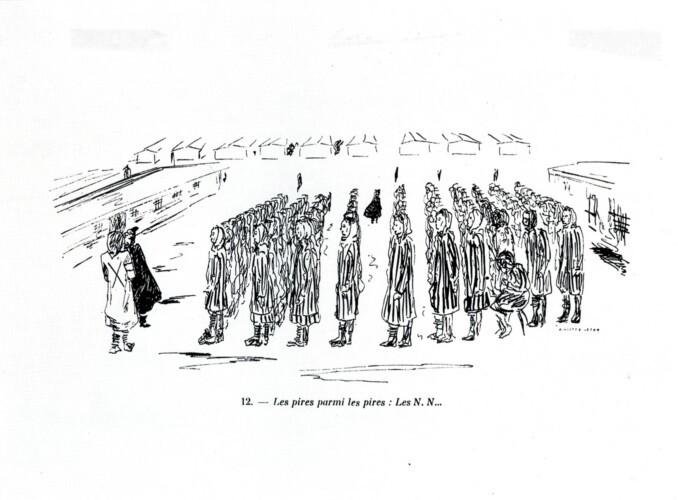
The roll calls were an ordeal for the prisoners. They had to stand motionless for hours, in the freezing cold, in silence, and respond when they heard their number called out. But listen to what 20-year-old Afroditi Koutrouli did at the time.

Sketch by French female political prisoner Violette Lecoq. From the album Ravensbrück, 3 dessins à la plume (1948).
Image

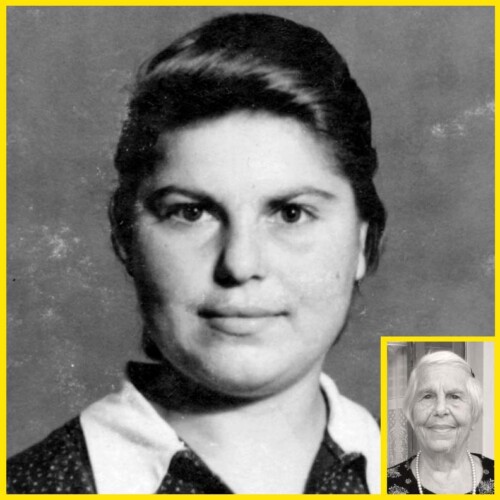
Afroditi Koutrouli, “Young people defy risks”

Afroditi Koutrouli remembers singing revolutionary songs softly during the morning roll call at Ravensbrück. If they had caught her, they could have executed her.

"Young people defy risks. Do you understand? I want to tell you about something that happened. When I was in Germany, they took us out for Appell. Do you know what Appell is? In the morning, they would call us zum Appell [roll call] to go outside. Because they needed to count us, to see whether anyone had escaped, or... But I used to sing, 'Zachariadis [Nikos Zachariadis, leader of the Greek Communist Party, imprisoned at Dachau], you fighter, destroyer of barbarity, a thousand arms are guarding you, our thoughts fly to you' [singing]. Or I sang 'But when the time comes and a storm breaks out in the struggle of the world's workers... A voice echoes in the air far and wide, with revolution we will drive out slavery. With leaders Voroshilov, Timoshenko...' [Red Army Generals]. A Russian woman, she was a soldier, they caught her, she says, 'Oi znaes Voroshilov!' [You know Voroshilov!] she says.
So, was it right for me to sing those songs there?"

Image

Theodoros Ayiotis, “I tuned in to the BBC”

Theodoros Ayiotis recounts how he used his relationship with a young German woman, Irma, to create with others a clandestine newsbulletin with BBC news.
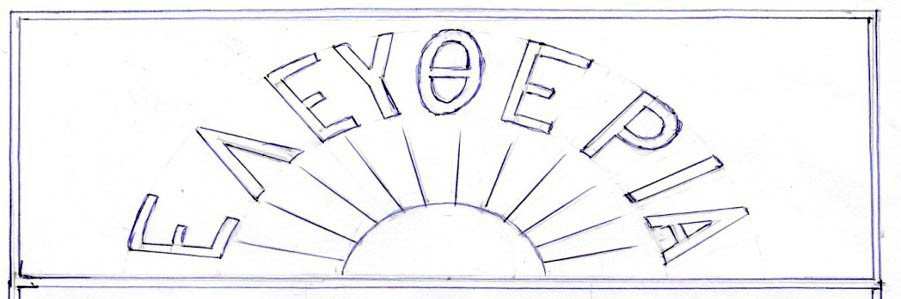
The newsbulletin’s logo designed by Ayiotis.

“We got together in there and agreed on that. We decided to publish a newspaper. Because we had better access to information than the Germans, than German civilians.

- How?

I'll tell you how. Germans were not allowed to listen to foreign radio stations. It was forbidden. How did we then manage to listen? Well, we would say to the German guard, "Excuse me, I'm going for a pee." A pack of cigarettes. "Ja ja." And then I would go to Irma. To the house nearby. "Irma, you stand guard outside in the yard!" Inside, I tuned the radio to the BBC, the news bulletin in Greek. And I wasn't the only one. Others did the same thing. We wrote down the information, and they would all bring it to me.”

Plot to assassinate Hitler

In many camps, there were organized resistance networks led by German and Polish communists. The amazing testimony of Parisis Maliokapis reveals the connection between Greek forced labourers in Augsburg and German anti-fascists.

Through this network they learned of the conspiracy of German officers, led by Claus von Stauffenberg, who planned to kill Hitler (July 20, 1944). The plot was known under the code name "Valkyrie" - "Pulheria" according to Maliokapis - and also planned to liberate concentration camp prisoners, as documented by von Stauffenberg's telegram.

Operation Valkyrie. The watchword was “Pulheria”

"But life was an ordeal. We expected to die, wondering whether we would live to see liberation. We heard that [the Americans] were slowly approaching. We learned from various sources... Fortunately, there was an organization of German resistance fighters against Hitler. And they had connected us as concentration camp prisoners. We were linked to this organization, and a woman acted as the liaison. She brought us news, and once there was a German attempt to kill Hitler, but it failed. We had been informed about this by the organization, they told us that the plot's code name was 'Pulcheria', if we heard the password Pulcheria, that would mean that Hitler was dead ... and immediately the German resistance fighters would come, liberate us, arm us, and then we would join them to force the rest to surrender, in case they fought back. But the plot failed, and we were left with fear and anxiety”.

Telegram from Claus von Stauffenberg regarding Operation Valkyrie (July 20, 1944).

Translation from German:
C) "The concentration camps must be seized immediately. The camp commanders must be arrested, the guards disarmed and locked up in the barracks. Political prisoners must be informed that they must refrain from any individual action until their release."
The telegram confirms Maliokapi's statements about a plan for a prisoner uprising.

Bundesarchiv Germany, CC 4.0