Our Sources
Oral Testimonies
Oral testimonies were our starting point. In total, we utilized 18 interviews with 6 narrators. With most of them, multiple interviews were conducted, covering their whole life story, including the periods before their arrest and after their return.

These narratives provided a ‘history from below’ perspective of the camp experience: the view of working-class people and peasants who were suddenly thrust into an inhuman regime, facing violence and death on a daily basis. They demonstrated how varied this experience could be, depending on the type of camp and the phase of the war. They also showed us the importance of viewing mainstream “History” through the lens of subjective experience and narrativity. We encountered several surprises: for instance, stories about survival strategies, forms of resistance, mutual solidarity under conditions of absolute deprivation, and bitterness over the reception the homeland gave them upon their return.
Other Sources
These six individuals were the only survivors we could find to speak with us about their experiences. However, we lacked a broader picture of the displaced persons from our prefecture: who were they, where did they come from, how, where, and why were they arrested, when were they sent to Germany and to which camps? How many died there and of what causes?
Thus began an extensive research journey, which allowed us to reconstruct the fundamental elements of this phenomenon with relative accuracy. Through this research, we cross-referenced information from our interviews with other sources. The main primary sources were:
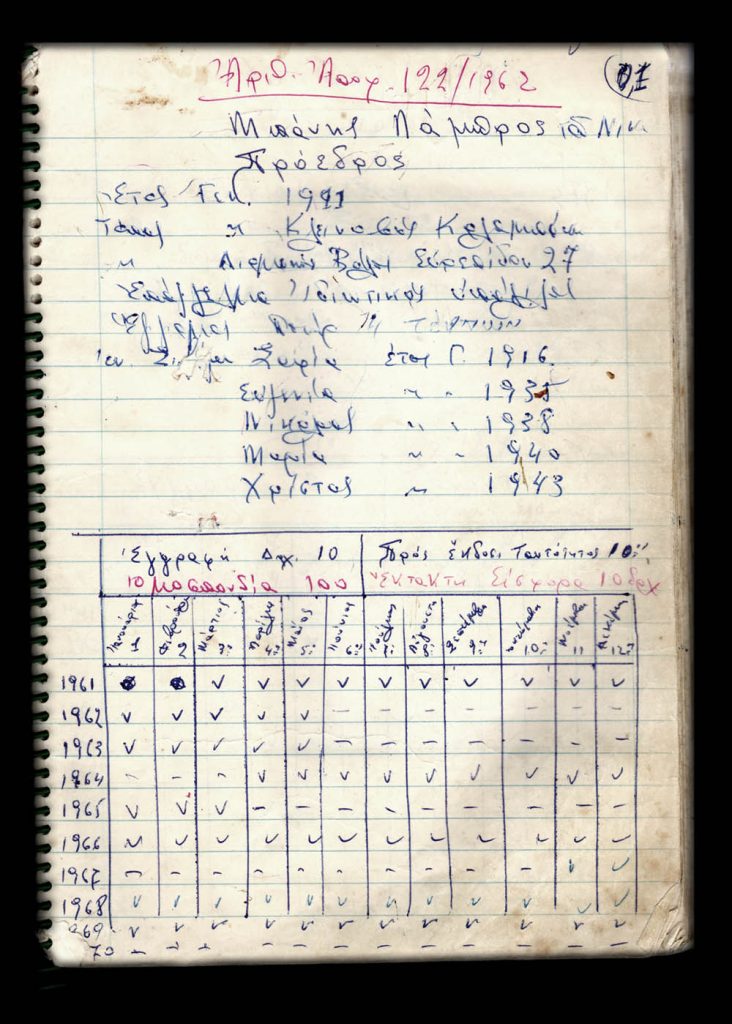
The Membership Registry of the National Association of Forced Labourers of Magnesia:, Founded in 1961 to assist members in claiming compensation under the Greco-German Agreement on Compensation for Victims of Nazism. It was handed to us by our narrator, Yorgos Fokoulis, its last treasurer. It includes data on 160 members, such as place and year of birth, occupation, and family status.

The Volos Court of First Instance Archive, “Nazism Rulings” (Greek State Archives, Magnesia branch): Applications and court decisions for the compensation of victims of Nazism, 1961–1965 (208 files concern forced labourers’ applications).

The “National Resistance” Archive (Greek State Archives, Magnesia branch): Applications for the recognition of forced labourers as National Resistance fighters, 1984–1987 (94 files).
The Bad Arolsen Digital Archives: https://arolsen-archives.org. This service manages the archives of Nazi concentration and forced labour camps, and the post-war searches for Holocaust victims. A significant portion of its collection of approximately 30 million documents has been digitized. Supplementary data for 50 additional forced labourers from Magnesia was found here. Note: Prisoners of War (POWs) are not included in this archive, as they fell under the jurisdiction of the Wehrmacht.
Testimonies published in the local press: (e.g., Tachydromos newspaper, 1965).
Testimonies published by Nitsa Koliou: (Unknown Aspects of the Occupation and Resistance (in Greek), Volume B, Volos 1985).
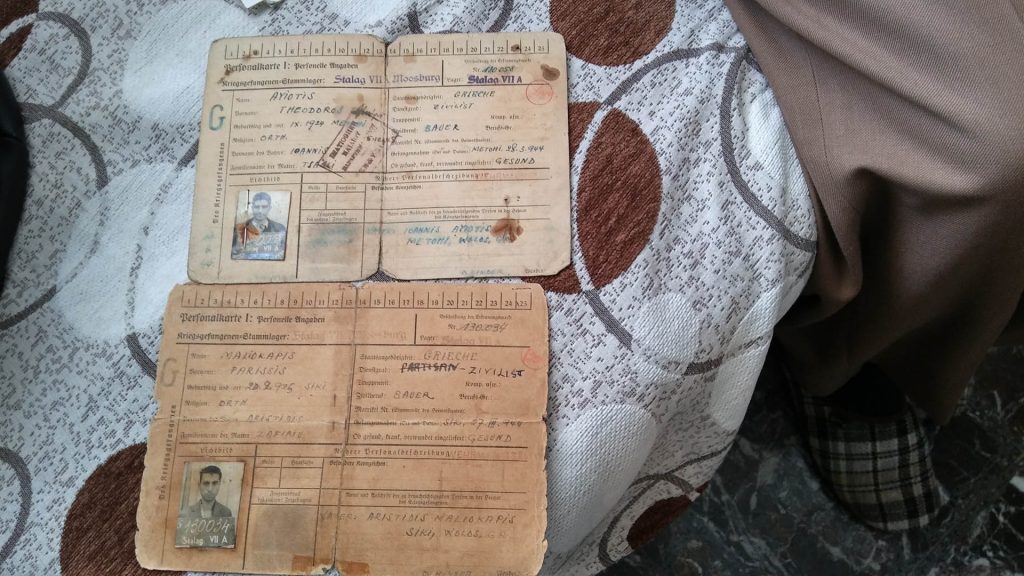
Other sources: Personal archives of former forced labourers, field research, camp memorial sites, and specialized bibliography.