The liberation of the camps
The gas chamber at Dachau, May 20, 1945. The Soviet and Western liberators were horrified to see endless piles of corpses.
International Red Cross Photo Archive

In early 1945, the Nazi camps were gradually liberated. The piles of corpses were endless.
The survivors were living skeletons, suffering from starvation and deadly diseases. Many died within hours of liberation.
The massive exploitation of foreign workers for the benefit of the German war economy left human wreckage wandering around the now defeated Third Reich. In the early days after liberation, amidst conditions of utter chaos, millions of displaced persons (DP’s) roamed around in search of transportation to return home. On the other hand, the imminent return to their homeland left many deportees wondering: should they return, stay in Germany, or emigrate elsewhere?


“I had befriended a fellow prisoner who was a journalist. […] And he knew that Dachau was close by. And as soon as we were released after three days, he said to me, "Come with me to Dachau." […] When we got there, I saw horrific things, which of course were worse than what we were going through. I saw a pile of corpses, they had gathered hundreds of journalists there, curious people, American and British soldiers, various people there, other journalists, and they were taking photographs. And the smell of death was unbearable, of course, but they didn't bury them so that more people could come to see ... I took a photo too, my friend had managed... he knew how things worked and had managed to obtain a camera."
Parisis Maliokapis
"1945, April 29, we were liberated. The Americans came to our camp there. Yes. As soon as the Germans saw them, they abandoned us, the guards hid and set us free. The Americans came. They found us. They put us — in bad shape, of course — they put us on a special diet. Then they took us from there and gathered us in a German camp, which was... of course, there were no Germans there now. They put us there. But... they brought us food, they carried loads of food, they fed us constantly, they took us to doctors, they looked after us."
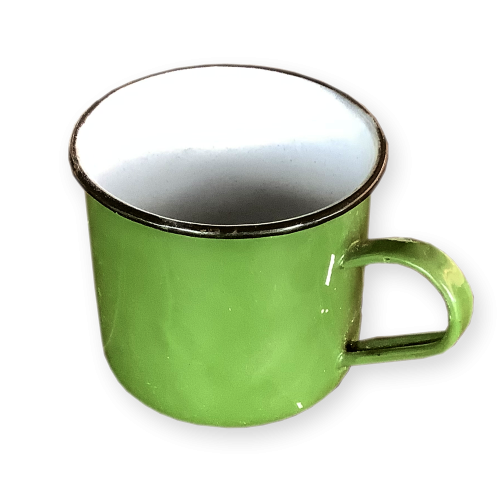
"Well, look here. If people oppress you, what will you do? The Russians liberated us, and the Russians were, so to say, gentlemen, and they took us from one place and put us on a train, and there was a German there. He was lying on the ground. So there was this German, and he was shouting 'Wasser... Wasser' [water, water]. The poor man had fallen to the ground, wounded. And I, with my naive, girlish mind, went over, we had a small cup, they had given us little tin cups like that, I went to the tap, in that camp where they kept us before sending us back to Greece, I went over to him and gave him some water. He said, ‘Tanke schön, Tanke schön, Fraulina, Frau’ [Thank you, miss]. Well, I said, ‘Drink some water now,’ I said. And the man got up and walked a few steps, from here to there. Bang, the Russians killed him. He was the highest-ranking agent of Germany. He carried a lot of documents from the Ministry. They found them. But they killed him. They asked me, ‘Why did you give him water?’ ‘He was a human being, he asked for some water and I gave him water.’ I felt sorry for him, to tell you the truth, even though they were our enemies, but even your enemy, they say, you should give him water. A glass of water, give him a piece of cake, for example, that's what we were taught at home and that's what we did."
Yorgos Fokoulis, a forced labourer in Kempten (Bavaria), recounts the circumstances surrounding the liberation of the Greek prisoners by the Americans, with the occupation of the German Air Force Club and the feast that followed.
“The 15 of us took the rooms above the beer hall, and the other 15 went to where they told us to go, to the German air force building. I have a picture. The offices were on the ground floor and the bedrooms upstairs. Each of us had his own bedroom, even a telephone... There was an oval-shaped room in the middle, an oval-shaped room, and that was the dining room! Yes. And next to it was a room with clean plates, stacks of plates! Made of porcelain! Yes. We took them from there to eat, and at the back there was a garden, and we didn't bother to wash the plates, we just threw them out from the window! [laughs]
- Now it was all yours!
Yes, all ours. We even had a flag! We made it, we wrote GREECE on it!”
Liberation, May 1945. Fokoulis standing, wearing a white shirt.
Collection Yorgos Fokoulis



Drag to scroll